
The Ultimate Rogue River Guide: Whitewater, Camping, and Logistics
Plan your perfect Rogue River adventure with Morrison’s. Explore detailed river sections, rapid ratings, campsite maps, permit info, and shuttle logistics for Oregon’s premier Wild & Scenic river.
Overview: A Classic Oregon Rafting Adventure
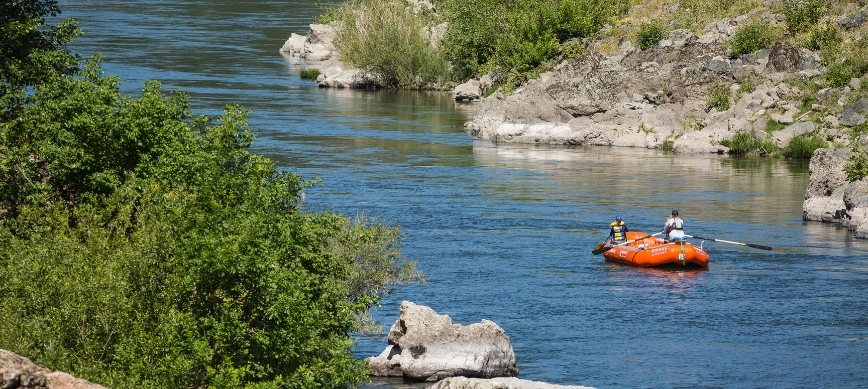
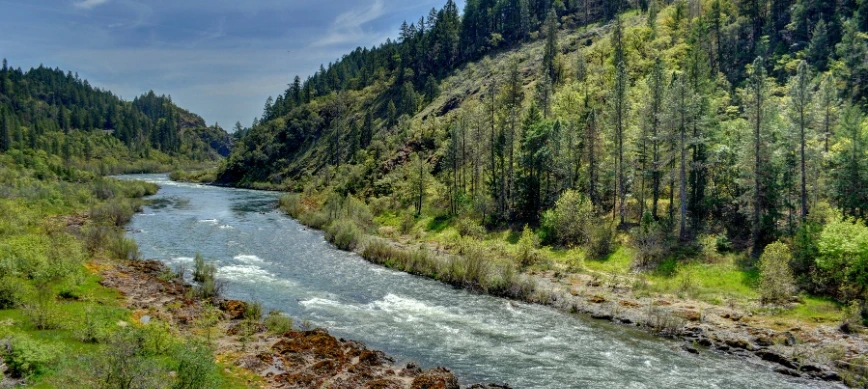
The character of the Rogue is defined by its “playful” nature. It doesn’t just flow; it tumbles through deep, lush canyons and volcanic gorges, creating a rhythmic mix of calm pools and adrenaline-pumping Class II and III rapids, with the famous Class IV Blossom Bar providing the trip’s crescendo.
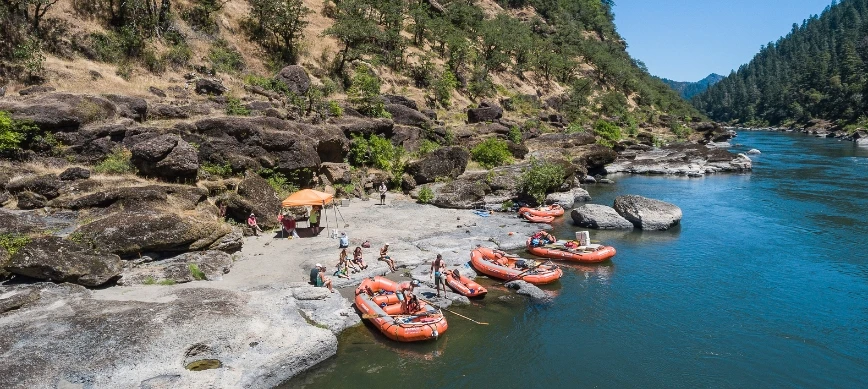
This specific blend of accessibility and excitement is what makes the Rogue special. It is wild enough to thrill seasoned boaters yet welcoming enough for families and first-timers. The water is often warm enough for swimming, inviting you to float through calm stretches while watching river otters play on the banks or bald eagles and osprey hunt for salmon and steelhead from the towering firs above.
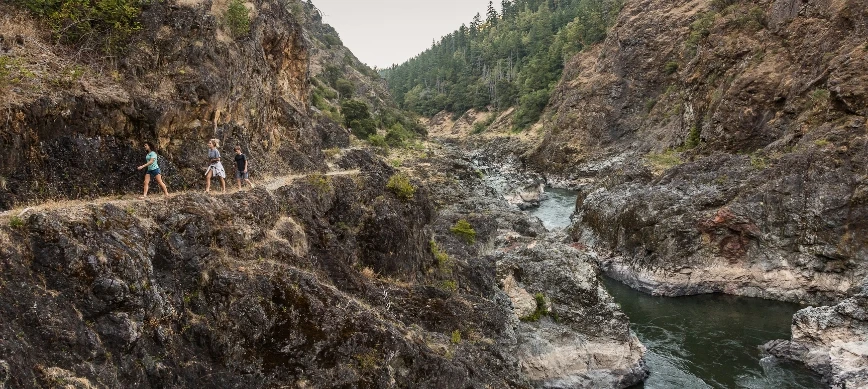
From the alpine chill of its headwaters to the warm, aromatic forests of the coastal range, the Rogue River offers a journey through a thriving, living ecosystem. Whether you are navigating the famous “Wild” section or floating the scenic lower stretches near the coast, the river promises an escape into a timeless, untouched Oregon.
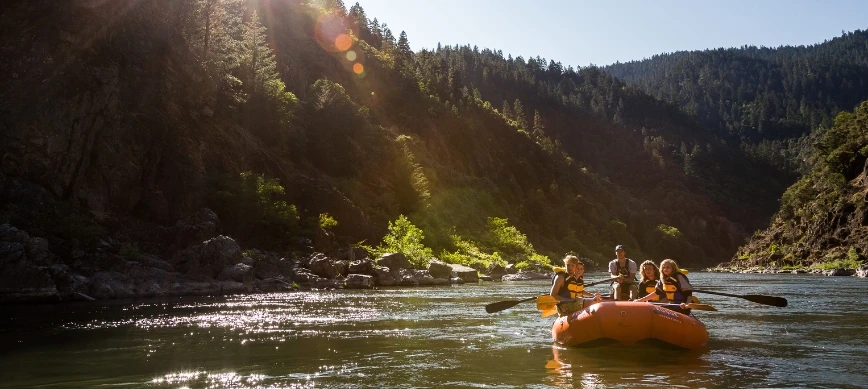
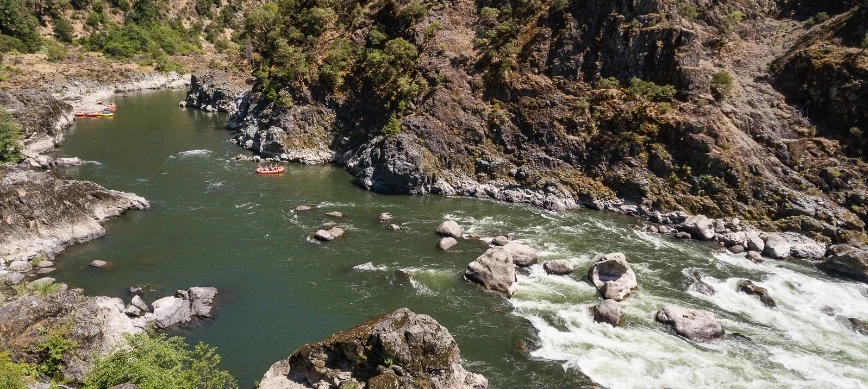
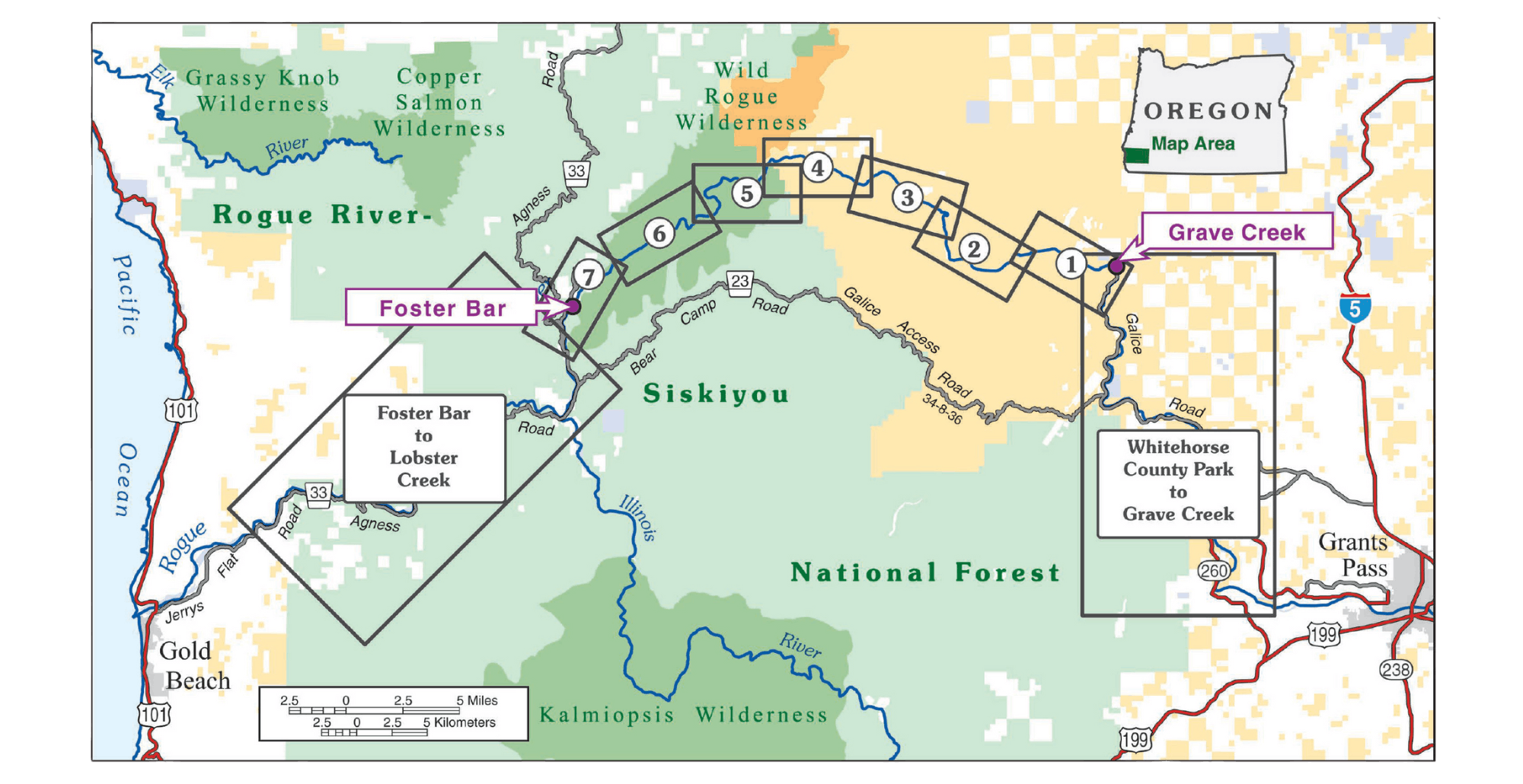
Rogue River Map & Sections Breakdown
While the legendary “Wild” section between Grave Creek and Foster Bar is the undisputed crown jewel of Southern Oregon rafting, it represents just one chapter of the river’s story. For the complete Rogue experience, seasoned boaters know to look both upstream and downstream. From the sun-drenched, friendly rapids of the Recreation Section to the quiet, misty solitude of the Lower Scenic Section near Agness, the river transforms dramatically as it flows toward the coast. Each stretch offers a distinct personality, whether you are seeking a quick day-trip warm-up or a seamless extension to your wilderness expedition.
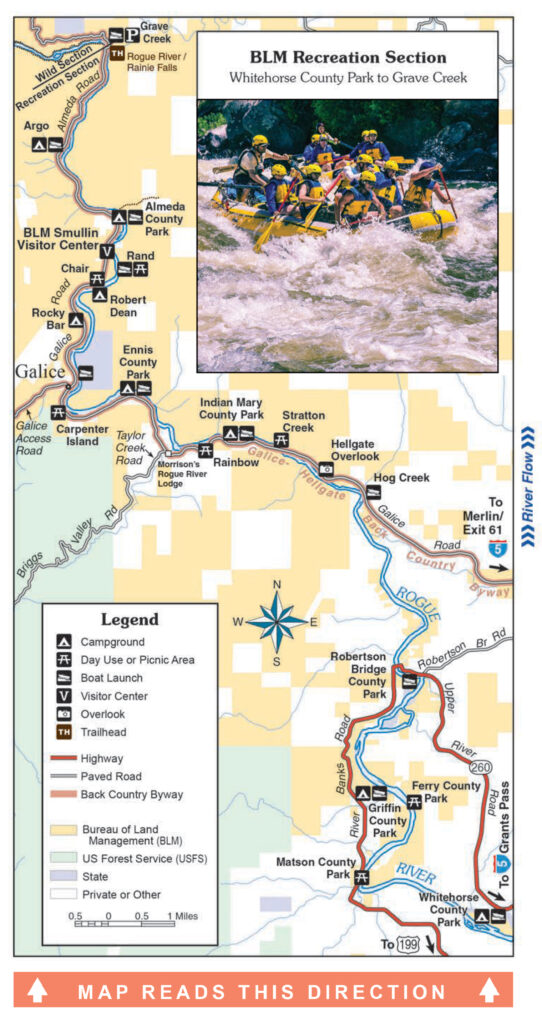
Known as the “Rec Section,” this accessible stretch serves as the perfect warm-up for a multi-day trip or a standalone day adventure. It flows through a mix of private land and public BLM corridors, offering warm water and friendly rapids.
-
Notable Features:
-
Hellgate Canyon: The river creates a deep, narrow gorge with towering rock walls—famous as a filming location for The River Wild.
-
Galice: A historic hub for boaters featuring the Galice Resort and store—your last stop for ice and supplies.
-
Almeda County Park: A popular developed campground and boat launch often used by groups launching early the next morning.
-
-
Rapid Class: Mostly Class I & II (Beginner/Intermediate).
-
Note: The section ends just above Grave Creek Falls (Class III), signaling the start of the Wild section.
-
This 34-mile regulated corridor is the heart of the Rogue River experience. Managed jointly by the BLM and USFS, it requires a permit during the peak season (May 15 – Oct 15) and offers a true wilderness disconnection.
- Famous Rapids & Mile Markers:
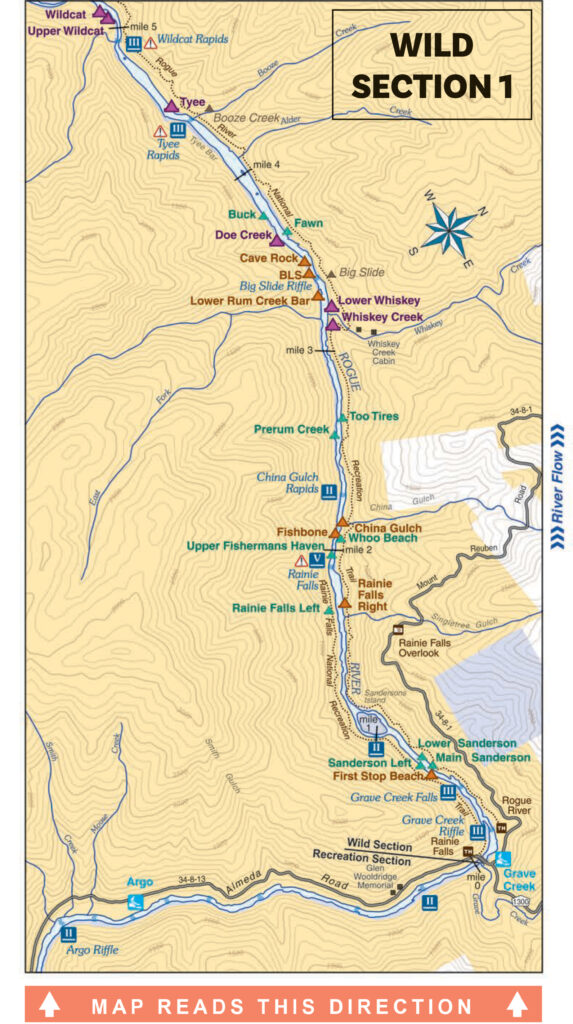
- Rainie Falls (Mile 1.7): A legendary Class V waterfall. Most commercial trips and private rafters choose the “Fish Ladder” channel (Class III) on the right or line their boats down the shore.
- Tyee Rapid (Mile 4): A fun, splashy Class III wave train that is a favorite for photographers.
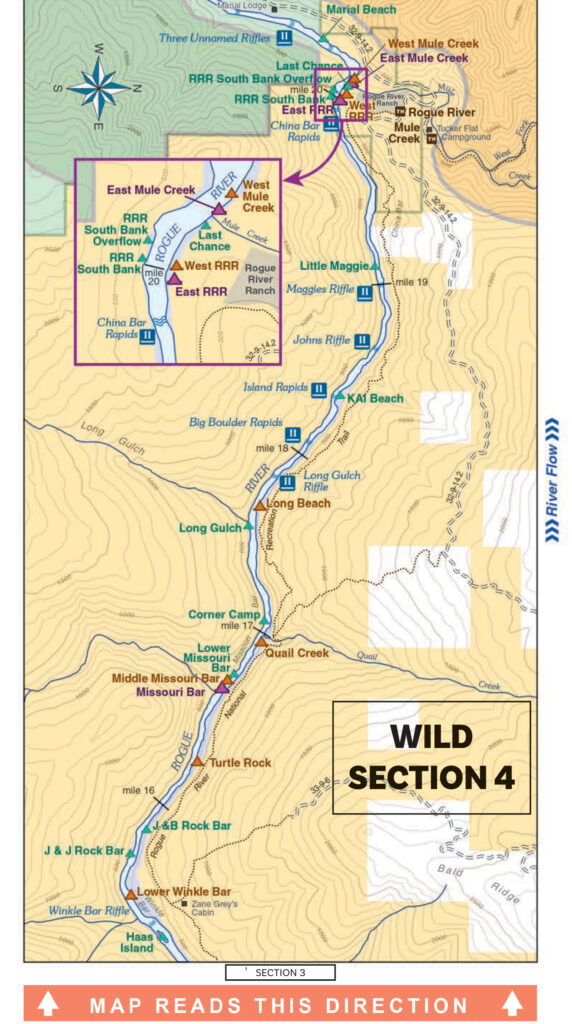
- Mule Creek Canyon (Mile 21): One of the most spectacular river canyons in the West. The river narrows significantly, creating the “Coffee Pot”—a swirling, boiling cauldron of water (Class III+).
- Blossom Bar (Mile 23): The river’s most famous and technical rapid (Class IV). Navigating the “Picket Fence” of boulders requires precise rowing. Scouting from the right bank is highly recommended.
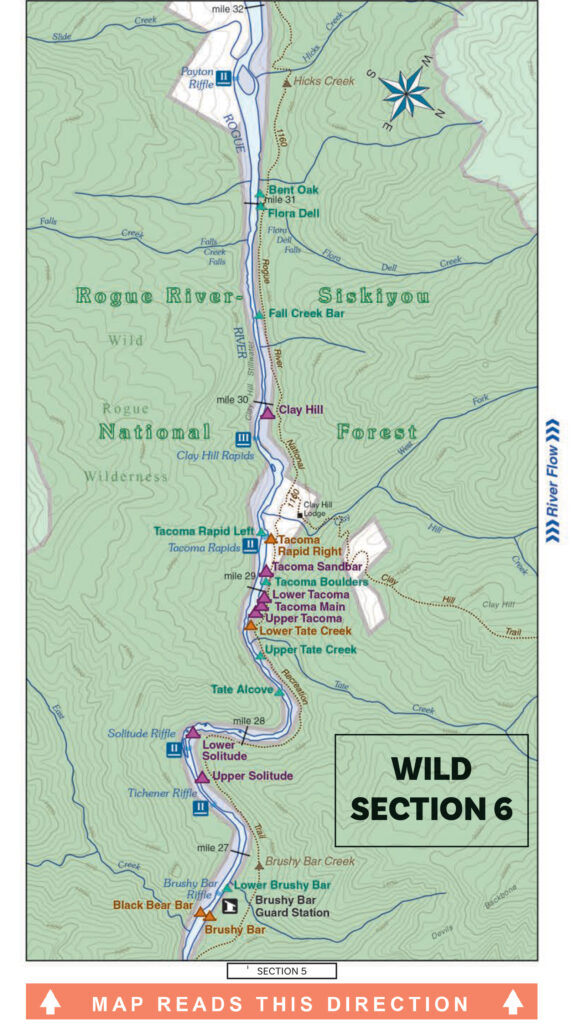
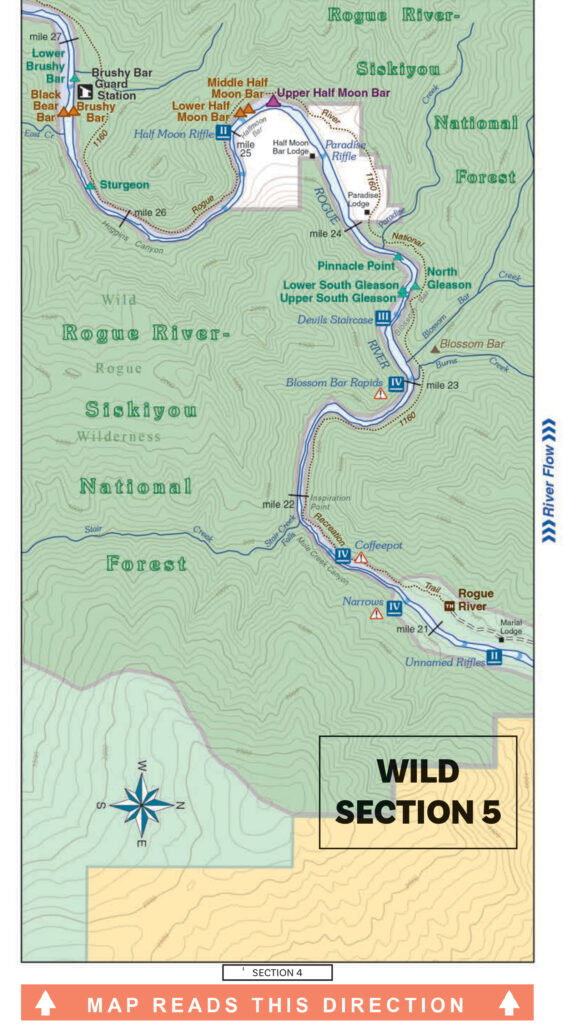
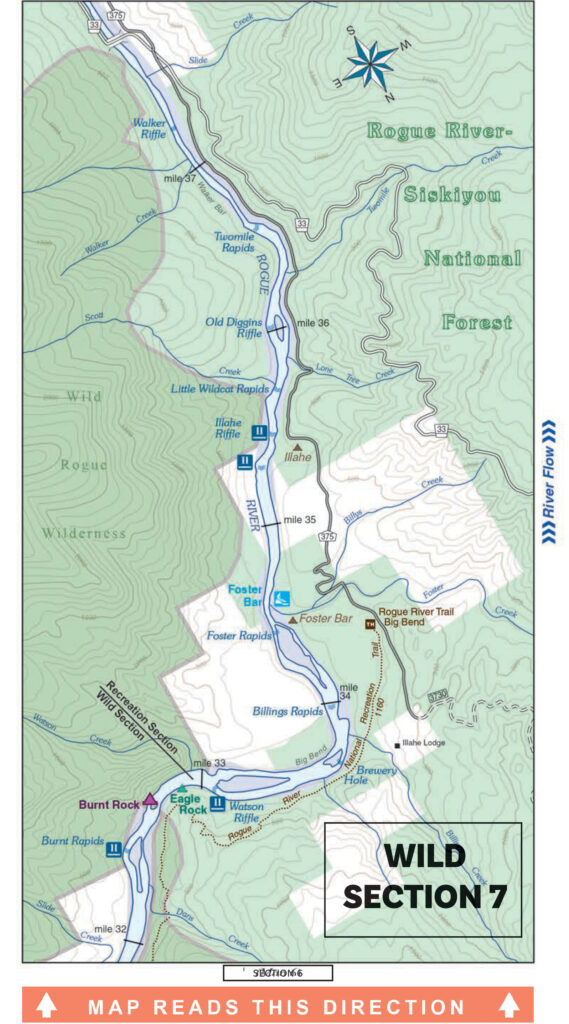
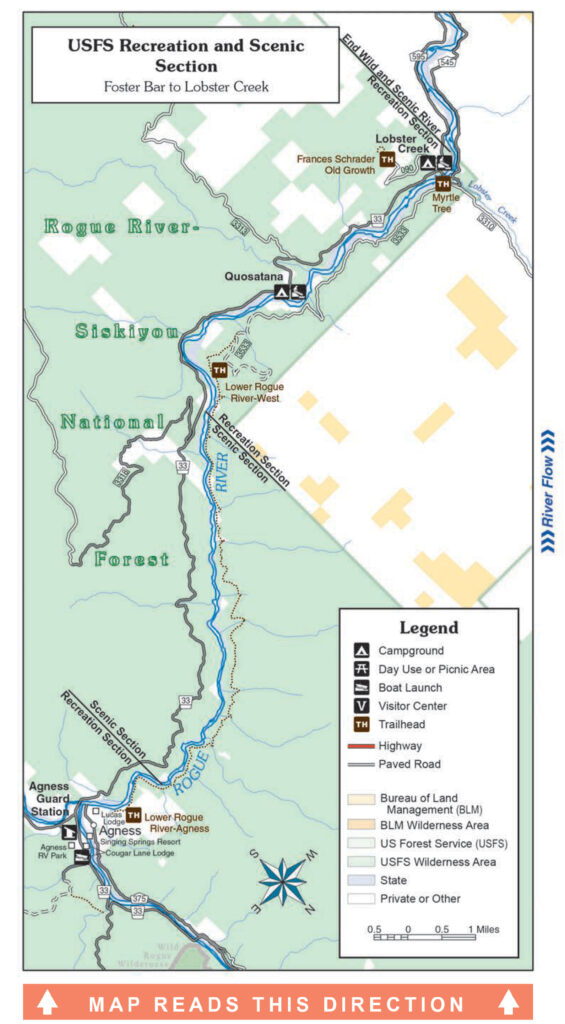
While many boaters take out at Foster Bar, the river continues through a stunningly quiet section managed by the Rogue River-Siskiyou National Forest. This stretch sees a fraction of the traffic and offers excellent wildlife viewing.
- Highlights:
- Agness: A small, historic community accessible by river. Famous for its riverside lodges like Cougar Lane and Singing Springs.
- Copper Canyon: A scenic gorge located downstream of the Illinois River confluence, often mentioned for its rugged beauty.
- The “Run Out”: As the river nears the coast, the current slows, making it ideal for inflatable kayaks or a relaxing drift before the take-out at Lobster Creek or Quosatana Campground.
Planning Your Rogue River Rafting Trip
Plan your perfect Rogue River adventure with Morrison’s. Explore detailed river sections, rapid ratings, campsite maps, permit info, and shuttle logistics for Oregon’s premier Wild & Scenic river.
Navigating the permit system is the first and most critical step in planning a private Rogue River expedition. Because the “Wild” section is a federally protected resource, access is strictly regulated to preserve the wilderness experience and protect the river corridor from overcrowding.
The Regulated Season (May 15 – October 15)
During the peak summer months, the number of boaters launching into the Wild Section is capped at 120 people per day.
-
Requirement: A competitive “Float Permit” is mandatory for all boaters during these dates.
-
Allocation: Permits are assigned primarily through a strict annual lottery system.
The Lottery Process: How to Apply
If you want to float the Rogue in summer, you must plan ahead. The lottery is conducted online via the federal reservation system.
-
Where to Apply: Visit Recreation.gov and search for “Rogue River Wild Section”.
-
Application Period: The lottery opens on December 1 and closes on January 31 annually.
-
Lottery Cost: There is a $6.00 non-refundable fee to submit an application.
-
Results: Applicants are notified of their success or failure on February 15.
-
Confirmation: If you win, you must confirm your slot and pay the $10.00 per person fee to the BLM no later than 10 days prior to your trip.
Missed the Lottery?
If you didn’t get a permit in February, don’t panic. You still have options to snag a spot through the “Open Pool.”
-
April Call-In: Unclaimed or cancelled lottery dates are released to the public during the first 5 business days of April. These are booked by phone (541-479-3735) on a first-come, first-served basis.
-
Last-Minute Openings: Starting May 5, you can check the “Float Space Availability” on the BLM website for cancellations. These can be reserved by calling the Smullin Visitor Center.
-
Day-of-Launch: You can show up at the Smullin Visitor Center at Rand (7:00 AM) to see if there are any “no-show” slots available for that day.
The Off-Season (October 16 – May 14)
For those willing to brave cooler weather and unpredictable flows, the off-season offers a quieter experience with far less red tape.
-
Self-Issue Permits: No lottery is required. You simply fill out a self-issued permit at the Smullin Visitor Center or the Grave Creek Boat Ramp before you launch.
Essential “Must-Haves” for Every Boater
Regardless of the season, every group must carry the following documentation and equipment to be legal on the water:
-
Oregon Aquatic Invasive Species Permit: Required for all boats (drift boats, rafts, kayaks) over 10 feet long.
-
Toilet System: An approved portable toilet system (like a “groover”) is mandatory to pack out all human waste.
-
Fire Pan: Ground fires are prohibited; you must use a metal fire pan to contain ashes and pack them out.
To the uninitiated, “CFS” (Cubic Feet per Second) is just a number. To a Rogue River boater, it dictates everything—from which rapids are runnable to how fast you need to paddle.
The Rogue is a pool-and-drop river, meaning its character changes drastically based on the water level. We generally measure flows at the Grants Pass Gauge or the Agness Gauge.
1. The “Sweet Spot”: 1,200 – 4,000 CFS
-
What to Expect: This is the ideal window for most boaters and encompasses the typical summer season flows.
-
Why it’s Great: At these levels, the river offers the perfect balance. There is enough water to cover the rocky shallows, making the rapids fun and splashy, but the current is manageable for swimming and fishing.
-
Rapid Character: Technical rapids like Blossom Bar and Rainie Falls are at their standard difficulty.
2. Low Water: Below 1,200 CFS
-
When: Late summer (August/September) or drought years.
-
The Vibe: Technical and precise. As the water drops, rocks that are usually underwater become obstacles.
-
The Challenge: You will need to be active on the oars to maneuver around exposed boulders. The current moves slower, meaning you’ll do a bit more rowing to get downstream.
-
Benefit: The water is often crystal clear and at its warmest, perfect for snorkeling and swimming.
3. High Water: Above 6,000 CFS
-
When: Spring runoff (May/June) or after winter storms.
-
The Vibe: Fast and powerful. The river changes from a technical rock maze into a flushing channel of big waves.
-
The Challenge: Eddies (calm stopping spots) become smaller and harder to catch. A swim here is much colder and longer than in summer.
-
Warning: Flows above 8,000 – 10,000 CFS are considered “High Water” for the canyon. At these levels, rapids like Blossom Bar can become extremely difficult or even impassable for some craft, requiring a portage.
4. Real-Time Data
Before you head to the put-in, always check the current gauges:
-
-
Grants Pass Gauge (Best for the Rec Section)
-
Agness Gauge (Best for the Wild Section)
-

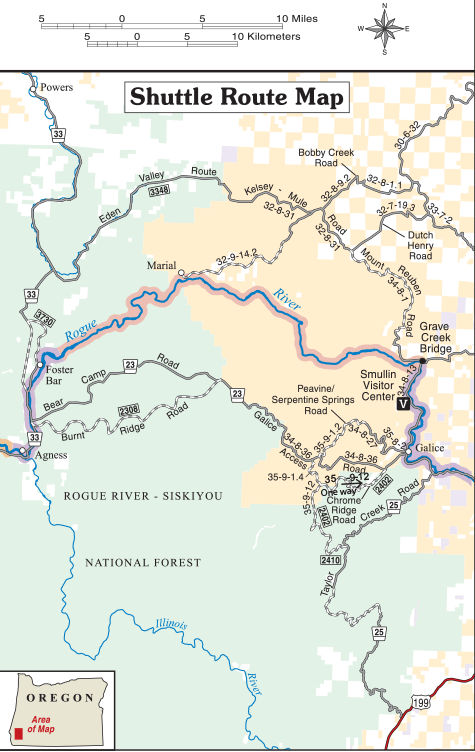
Morrisons offers shuttle services May through October of each year and transports vehicles from Almeda to Foster Bar or Agness, as well as Hog Eddy/Cougar Lane or Quosatana (Q) Creek.
-
Standard Route (Bear Camp Road): $219 per vehicle.
-
Most common route during peak summer season.
-
-
Early/Late Season Routes: When snow blocks the high-elevation Bear Camp Road, we must use longer alternate routes:
-
Eden Valley Route: $309 (Early season only).
-
Coastal Route: $399 (Use when both Bear Camp and Eden Valley are closed).
-
-
Group Discount: Save $15 per car for groups of 4 or more.
-
Use Promo Code: 4ORMORE.
-
Note: Each driver must book their own shuttle individually online.
-
(Note: All shuttles are subject to an additional 3% USFS fee.)
To ensure a smooth transfer, please review the following requirements before booking:
-
Fuel Requirement: Your vehicle must have at least 1/2 tank of gas. We cannot move vehicles with less fuel.
-
Timing: We need a minimum of 48 hours to move your vehicle. We cannot accommodate 24-hour turnarounds.
-
Vehicle Size: We cannot shuttle Class A Motorhomes or any vehicle longer than 32 feet. If towing a trailer, the combined length must be under 40 feet.
-
Electric Vehicles: We do not offer EV charging services on our property.
-
Security: We always lock cars at Foster Bar. Do not leave notes asking for cars to be left unlocked unless the lock is broken.
-
Almeda Launches: If you leave your car at Almeda Park, please pay the daily park fee. MRWA is not responsible for tickets.
-
After breakfast, push off for your final day on the Rogue. The river builds in excitement with a series of fun rapids that carry you through the last miles of the Wild & Scenic canyon. Keep your eyes peeled for bald eagles, black bears, otters, and osprey.
-
2:00 pm – Take out at Foster Bar, near Agness, Oregon.
Departure Options
-
From Foster Bar, our vans return you to Morrison’s Lodge.
-
For more flexibility, you may choose to have your personal vehicle shuttled to Foster Bar (additional cost). From here, many guests extend their journey with a trip to the Oregon Coast or the majestic Redwoods, just 26 miles away in Gold Beach.
Recreation Section Campgrounds
| Campground Name | River Mile | Side | Description |
|---|---|---|---|
| Whitehorse Park | Mile 0 (Rec) | Right | Large county park with full hookups, showers, and boat ramp. |
| Griffin Park | Mile 5 | South | Popular public park with easier boat access. |
| Indian Mary Park | Mile 12 | Left | Developed county park with tent/RV sites. |
| Almeda Bar | Mile 16 | Left | The preferred "staging" camp for many boaters launching the next day. Features a concrete boat ramp and large camping area. |
Wild Section Campsites (Permit Required)
Key: (L/R) = Side of River | 🐻 = Bear Safe Amenities (Fences/Hoists/Boxes)
| Mile | Site Name | Side | Cap. | Description & Notes |
|---|---|---|---|---|
| Reach 1: The Canyon Begins (Grave Creek to Tyee) | ||||
| 1.7 | Rainie Falls | R / L | Med | Camps on both sides above the falls. No direct trail access on Left. |
| 3.2 | Whiskey Creek 🐻 | R | Large | Famous historic cabin site. Bear resistant food storage available. |
| 4.5 | Tyee Camp | R | Large | Massive flat sand beach. Popular for large groups. |
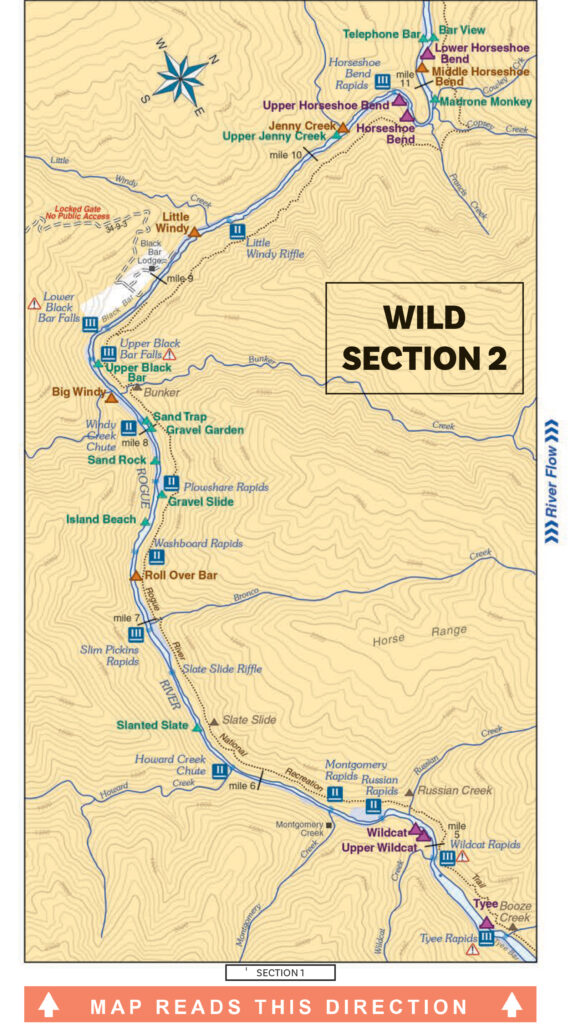
| 5.1 | Wildcat | L | Large | Large sandy bench with tent sites spread across the area. Toilet blind. |
| Reach 2: The Black Bar Area (Tyee to Marial) | ||||
| 8.0 | Grave Creek / Sand | R | Small | Several small stops like "Sand Rock" and "Gravel Garden". |
| 8.2 | Big Windy | L | Med | Steep bedrock approach. Home to a large sandy bench. Outhouse on site. |
| 8.4 | Upper Black Bar 🐻 | L | Small | Steep sandy landing. Features Bear Food Hoist. |
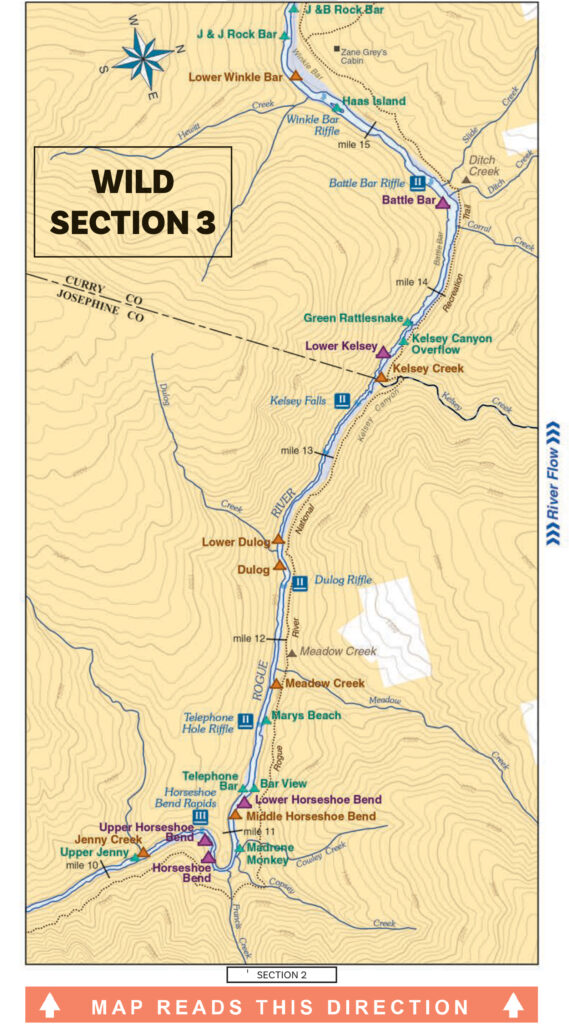
| 10.6 | Horseshoe Bend 🐻 | R | Large | Upper bench camp with bear resistant food storage. |
| 13.6 | Lower Kelsey | L | Med | Large sand beach landing. Difficult to spot from the river. |
| 14.4 | Battle Bar | L | Large | Historic site of the Battle of the Rogue Rock. Large upper bench. 20'x40' historic shelter. |
| 15.5 | Winkle Bar | R | Med | Zane Grey's Cabin. Long rock/sand bench. Do not camp on the private land easement. |
| Reach 3: Mule Creek & The Ranch (Marial to Blossom) | ||||
| 20.0 | Rogue River Ranch 🐻 | R | Large | Access to the museum. Protected by Electric Bear Fences. |
| 20.1 | Mule Creek | R | Large | Sandy beach next to the creek. Divided into "East" and "West" sites. |
| 20.4 | Marial Beach | R | Small | Note: Administrative access point. Not recommended for general camping. |
| Reach 4: Below Blossom (Blossom Bar to Foster Bar) | ||||
| 23.5 | Gleason Bar | R / L | Med | "North" and "South" Gleason. Rocky landings with steep climbs to benches. |
| 24.8 | Half Moon Bar | R | Large | Series of three camps (Upper/Middle/Lower). Long sand beaches. |
| 26.6 | Brushy Bar 🐻 | R | Med | Ledge rock landing. Features Bear Boxes & Hoists. Outhouse available. |
| 27.4 | Solitude 🐻 | R | Large | One of the premier camps. Features Electric Fences & Hoists. Outhouse available. |
| 28.9 | Tacoma 🐻 | R | Large | Massive grassy bench with multiple landings. Features Bear Resistant Storage & Outhouse. |
| 32.7 | Burnt Rock | L | Small | Ledge rock landing with a flat sand beach. |
Lower Section Campgrounds
| Campground Name | River Mile | Side | Description |
|---|---|---|---|
| Foster Bar | Mile 34 | Left | The main take-out. Features a developed campground, water, and restrooms. |
| Quosatana | Mile 43 | Left | Large USFS campground with a boat slide. Popular for fishing in the fall. |
| Lobster Creek | Mile 48 | Right | A gravel bar access point often used as the final destination for "sea-to-source" hikers or lower river floaters. |
Floating the Rogue River is a thrilling experience, but the wilderness environment demands respect. Most accidents on the river are preventable with the right preparation and mindset.
1. On-River Safety
Wear Your Life Jacket: It is the single most important piece of gear you own. Ensure you have a U.S. Coast Guard-approved Type III or Type V PFD (Personal Flotation Device). It should be worn at all times while on the water.
“When in Doubt, Scout!”: If you cannot see a clear line through a rapid, pull over to the shore and walk ahead to look. Never invite a blind encounter with the unknown.
Be Active in Trouble: If you find yourself in the water, be an active participant in your own rescue. Swim aggressively to safety or away from hazards rather than freezing up.
Whistles are Mandatory: A sound-making device (whistle or airhorn) is required on all personal watercraft and is your primary tool for signaling distress.
Water Levels Matter: Remember that the river changes character with the flow.
Low Water (< 1,200 CFS): Rapids become technical with more exposed rocks.
High Water (> 6,000 CFS): The water becomes powerful, covering rocks but creating dangerous hydraulics and fewer eddies.
2. Camp Safety (H3)
Surprisingly, the Boater’s Guide notes that “Most accidents happen in the home”—or in this case, your camp.
Watch Your Step: The riverbank is full of uneven, slippery rocks. River sandals offer the best traction to prevent slips and falls. It is often smart to keep your life jacket on until you are fully settled on dry land.
Water Purification: “Think before you drink.” Neither the Rogue nor its side streams are treated. You must boil, filter, or chemically treat all water used for drinking, cooking, and dishwashing to prevent illness.
Fire Safety: Fire pans are required for all open fires located within 400 feet of the river’s edge. You must pack out all your ashes. Be aware of summer fire restrictions which may ban open fires entirely.
3. Wildlife & Environmental Hazards
Bear Awareness: The Rogue has a healthy population of black bears (which can also be brown, cinnamon, or blond).
Storage: Coolers and dry boxes should be strapped together. Food must be stored in bear-proof containers or hung at least 12 feet off the ground and 6 feet from tree trunks.
Clean Camp: Remove all food smells from tables and utensils immediately after eating.
Common Pests: Be on the lookout for rattlesnakes, ticks, bees/yellow jackets, and poison oak (which is abundant along the banks).
4. Emergency Contacts
- In the event of a serious emergency, cell service is non-existent in the canyon. Satellite phones or devices (like InReach/Spot) are recommended.
- Emergency Services: Dial 911 (Note: Response times will be long due to remote access).
- Smullin Visitor Center (Rand): 541-479-3735
Hours: 7:00 AM – 3:00 PM (May 5 – Oct 15).
Gold Beach Ranger District: 541-247-3605
BLM Email Access: BLM_OR_MD_Rogue_River_Mail@blm.gov
Frequently Asked Questions
The Rogue River has a little bit of everything for all skill levels of boaters from beginner class I-II rapids to intermediate level class IV rapids in the wild and scenic canyon. While some sections are more navigable than others, be sure to consult an expert before launching your boat on the river as hazards exist.
The Rogue River, particularly the famous “Wild and Scenic” section in Oregon, generally features Class I to Class IV rapids. While much of the river is friendly to intermediate boaters, there are distinct sections and specific drops that require significant skill.
-
Recreational Sections: The stretches often used for half-day or day trips (like the “Nugget” stretch near Merlin) generally feature Class I and II water, with a couple of Class III/IV rapids (like Nugget Falls and Powerhouse) that are often scouted or portaged by beginners.
-
The “Wild” Section: This is the famous multi-day canyon trip (Grave Creek to Foster Bar). It is pool-drop in nature, meaning calm pools separate the rapids, giving boaters time to recover. There are two class IV rapids and others rated as II-III that should be taken seriously.
The Rogue River offers a mix of intermediate cruising and high-stakes whitewater, with the hardest challenges centered around technical maneuvering and powerful hydraulics. The highest-rated drop is Rainie Falls (Class V), a sheer waterfall that most boaters typically bypass via the easier “Fish Ladder” or “Mid-Chute” channels to avoid damage. In contrast, Blossom Bar (Class IV) is widely considered the technical crux of the river; unlike Rainie, it cannot be bypassed and forces boaters to execute a precise lateral move to avoid a hazardous wall of rocks known as the “Picket Fence.” Beyond these, the river features the narrow, boiling constriction of Mule Creek Canyon and the heavy waves of Clay Hill, both of which require constant vigilance and strong rowing skills.
| Rapid Name | Class | Key Challenge & Description |
| Rainie Falls | V | A 12-foot vertical waterfall. While it is the highest-rated drop, most boaters take the Class III “Fish Ladder” channel to the right to bypass it. |
| Blossom Bar | IV | The most technical rapid on the river. It requires a mandatory “ferry” move (rowing upstream/sideways) to avoid being pinned on the jagged “Picket Fence.” |
| Clay Hill | III/IV | A “big water” rapid located after Blossom Bar. It features a massive hole and standing waves at the bottom that can easily flip a raft. |
| Mule Creek Canyon | III+ | A narrow, mile-long gorge. The water boils and swirls violently (the “Coffee Pot”), which can spin boats and make directional control difficult. |
To raft the “Wild Section” of the Rogue River (Grave Creek to Foster Bar), you must secure a permit, with the process differing by season. During the regulated high-use season (May 15 – October 15), access is limited to 120 people per day and allocated primarily through a competitive lottery on Recreation.gov. The application window runs annually from December 1 to January 31, meaning you must apply by the end of January to secure a primary spot for the upcoming summer. If you miss this window, you can attempt to book unclaimed permits when they are released on May 5th, or check the website frequently for last-minute cancellations.
During the non-quota season (October 16 – May 14), advance reservations are not required. Instead, boaters utilize a self-registration system. Regardless of the season, all private boaters must physically stop at the Smullin Visitor Center (Rand) on the day of or the day prior to their launch to pick up their actual permit and receive tags for their portable toilet systems before entering the canyon.